Wednesday, September 16, 2015

Montana Short Story/I Remember Exercise

AGENDA:
Warm up:

Permission to practice:

“Through practice you actually do get better. You learn to trust your deep self more and not to give in to that voice that wants to avoid writing.”
— Natalie Goldberg Writing Down the Bones

The challenge: I remember

  • Your earliest memory. Capture every detail. Document the quality of the memory — is it as sharp as HDTV or hazy and ethereal, enveloped in fog? Write for 10 minutes. Go.
  • Your happiest memory. Tell us the story of the happiest memory of your life. What happened? Get it all down, no detail left behind. The clock is ticking — get writing.
  • Your worst memory. Record the pain, the anger, the shame, the terror, the hurt. You’ve got ten minutes to relive it. Keep your fingers typing.
  • Freestyle memory. Write I remember at the top of your post, hit start on the timer, and write about the first memory that comes to mind. Ten minutes. Don’t stop.
  • I remember/I don't remember
     
    Work on Montana Short stories
    HMWK: Read to pg.        for Friday

Sunday, September 13, 2015

Montana Short Story assignment

Work on short story:

Your Montana story is to be written in the first person POV  (I).  It should begin with a prologue in the present that may be only a paragraph or so long from the point of view of the protagonist several years after the main incident in the story (he or she is older and wiser).  Then FLASHBACK to the key incident that made him or her "grow up."  Let your story be a "coming of age" story.  At the end, write an epilogue from the point of view of the character in the present.

USE MLA HEADING, TIMES NEW ROMAN font 12 pt. only, and double space!

HMWK:  Read to page 102 (Part Two) in Montana 1948 for Wednesday.

Montana Study Guide part 1

AGENDA:

BELLWORK: Pronouns

Study Guide, Part I
Montana, 1948, prologue (and chapter one, pages 11-54) 

CLOSE READING:
Guiding Questions
1. Before you even begin reading, the novel story announces in its title the importance of its setting. What expectations are established with this title? What do you know about Montana, about 1948, about Montana in 1948? What do you know about novels and stories set in the West?

2. In the prologue, the narrator, David Hayden, explains a few things: how old he was when the story took place, how old he is now, and what has happened since. List this information, and then speculate: why, perhaps, is he telling the story now? What expectations does this establish for the story to come?

3. Also in the prologue, David offers a list of images. What do these images suggest? And what do you make of his insistence, on the following page, that these images, and others like them, be viewed simultaneously, not chronologically?

4. Lastly, David describes himself at the bottom of page 12 as "a witness." What does this word mean? List all its possible meanings.

5. On page 15, David introduces the setting promised in the title. What are the important facts, figures and details of this description? What kind of place is Mercer County?

6. On page 16, he describes that time in his life as "a new, blessedly peaceful era." How so? And how is this related to David's own age? (Why is 12 more peaceful than, say 10, or 15?)

7. On the same subject, what do we already know about Mercer County that tells us to be suspicious of this idyllic description?

8. The following pages are devoted to a description of David's father, in particular his job. In what ways does he defeat our expectations of the typical Western lawman?

9. Along the same lines, a great deal of time is devoted to a description his gun and holster. How does this encapsulate his failure to conform to our image--and David's image-- of a "typical" Western sheriff? How does Dave seem to feel about this?

10. The badge, too, gets some attention, and here David comments on something he later learned about it (page 19). What is the significance of his new, adult understanding of the reason his father never wore a badge?

11. On pages 19-21, we learn that the Hayden family is something of a dynasty in law enforcement. Later, on page 21, David describes his father as a man "who tried to turn two ways at once." Describe this conflict, including in your answer some thoughts on David's reference, in the same paragraph, to his "grandfather's domain."

12. A patriarch is a father figure, one who heads a family. A patriarchy is a society that is ruled by men. If the world of Mercer County is a patriarchy, what values are its principle values? What is the LAW?

13. On page 22, David lays out a second conflict. What is it?

14. Why is it significant that David and his family live "in the middle of town"? (page 23) What does this positioning suggest?

15. Comment intelligently on David's other life--his country life--at his grandfather's ranch. Is he, like his father, a man pulled two ways?

16. What do you make of the story of the toothless Indian woman on page 25? What does it show about Bentrock, and the general attitude of whites toward Indians? And how does this foreshadow the accusations later made against David's uncle?

17. On the following pages, 25 to 29, David descibes Marie Little Soldier and his feelings for her. Comment on two details: the incident, mentioned on 29, in which he accidentally sees her naked (what else in the story does David see that is naked?); and his remark on page 25 that "her body could be ready, at a moment's notice, for sex or work."

18. Why do you think David mentions his own encounter with chicken pox on page 28? Hint: he's speaking of a childhood disease, suffered as an adult. 

Thursday, September 10, 2015

Montana 1948

AGENDA:

Bell Work: Noun handout

Montana 1948
Continue to work on web quest
If you haven't finished the "Prologue Writing exercise,"  Finish that and save.

STUDY GUIDE: Working with a partner or small group, work on the study guide to record your understanding of the text.  Pay special attention to the page numbers.  CITE TEXT EVIDENCE to support your CLAIMS (or refer to page numbers),

As time permits, we will discuss the study guide questions as a whole class.

Saturday, September 5, 2015

Grammar/Montana 1948

AGENDA:

Period 3:  Take the grammar quiz from the previous post and post your results.

Period 4:
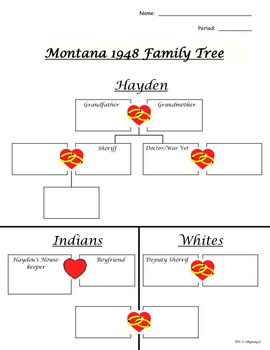
mcdn1.teacherspayteachers.com/thumbitem/Montana-1948-Larry-Watson-Family-Tree-with-Key-1061932/original-1061932-1.jpg


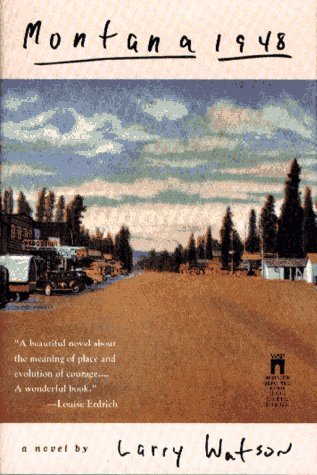
http://d.gr-assets.com/books/1342102477l/781653.jpg

Read the Prologue aloud and discuss.

Write Montana 1948 exercise.

If time permits, let's do a WebQuest
and create a padlet (formerly known as wallwisher):

http://montana1948webquest.weebly.com/

http://padlet.com/marcy_gamzon/mf8qb2uff6n7
isearch for images and information on the web:

http://www.thepeoplehistory.com/1948.html

http://www.brainyhistory.com/years/1948.html

Tuesday, September 1, 2015

Welcome Back, Creative Writing Majors!

AGENDA:

Welcome to SOTA's  Creative Writing Lab and the Creative Writing program. Ms. Gamzon

1. Explanation of seating arrangement, how to sign in to the computer for the year and save this blog as a favorite

 2. Review Course Criteria/Writing Lab procedures and assign lockers!

3. Activity: Pass out journalls.  Watch how to be awesome: Write your response in  your journals
https://www.youtube.com/watch?v=RwlhUcSGqgs

2. Introductions--About the Author--Using Word on the Mac--How to log in, go to blog, save as favorites,

Write a short biographical paragraph about yourself in the 3rd person (he or she) for the publication of your new book. Describe yourself to let your reading public know more about who you are, what you have accomplished, what interests you, and what your life is like.

Example:
Alexander Christie is currently a 9th grade creative writing major at School of the Arts. He is 13 years old. He currently lives with his parents in Rochester, New York and has a sister studying theatre in New York City. In his free time, he enjoys reading books and writing short stories. His family is very supportive of his writing and everything else he is invested in. Although he hasn’t written any long term pieces of writing, he hopes to write and publish a novel someday. Aside from writing, he also enjoys singing, dancing, and acting in various productions. He loves living in an arts community and being able to do the things he loves. Going into his 9th grade year, he is excited to be learning new things about writing and himself. He hopes that he can continue to express himself through the arts after school, and share his knowledge with the world.

Share these bios.  Learn how to post in comments on blog.


3. Visit Grammar and Style Websites--Using the internet


Stephen Fry on Language:
http://www.youtube.com/watch?v=J7E-aoXLZGY&feature=youtube_gdata

Grammar Girl
www.grammar.quickanddirtytips.com

Grammar Bytes

http://www.chompchomp.com/menu.htm
The Blue Book
www.grammarbook.com

Take the pretest and post your results:
http://www.grammarbook.com/grammar_quiz/grammar_pretest.asp

HMWK:  Get course criteria sheet signed for 10 points
Read Montana 1948 to pg. 54 (Part 1) for Tuesday's class

Wednesday, June 3, 2015

9th grade Portfolio

9th Grade FINAL PORTFOLIO INSTRUCTIONS


There are two (2) parts to your final portfolio:
A. A 4-6 page, double-spaced, typed self evaluation essay
B. A variety of your best work chosen from all your CW classes
Your final portfolio will count for both 9th grade creative writing classes and will be reviewed by Mr. Craddock and Ms. Gamzon. It will constitute 25% of your final grade.
Part A. Self Evaluation Essay (see details below)
Part B. Portfolio
Select work that you created this year in Ms. Gamzon’s or Mr. Craddock’s classes. All work should be copies of original work. No journals will be accepted. Follow the guideline below.
Table of contents. Your table of contents should order your portfolio into the following parts:
a. Poetry
b. Fiction
c. Non-fiction
d. Scripts
e. Special projects
Poetry. Choose 6-8 of your best poems. Select work that shows your understanding and growth in the field of poetry. Each poem’s title should be listed on the table of contents.
Fiction. Choose 4-5 of your best fiction pieces. Select work that shows your understanding and growth in the field of fiction. Each fiction piece’s title should be listed on the table of contents.
Non-fiction. Choose 2-3 of your best non-fiction pieces. Select work that shows your understanding and growth in the field of non-fiction. Each non-fiction piece’s title should be listed on the table of contents.
Scripts: Choose 1-3 of your best scripts. Select work that shows your understanding and growth in the field of script writing. Each script’s title should be listed on the table of contents.
Special Projects: Choose 3-4 of your special projects (documentary, newsletter, brochure, literary magazine, online blog, etc.) that show your growth and creative ability. Each project should be listed on the table of contents. If you have been working on a project not assigned in class, you may include this work in your special projects. (Example: I am working on a novel, and I haven’t told my teachers or I have written a musical, etc.) Please do NOT print your special project, unless you already have an extra copy. Instead, please write about these projects in your reflection.

Self Reflection Non Fiction - Creative Essay:
During the entire freshman year, we have thrown quite a bit of information, projects, and assignments your way. We did not do this to be cruel, but to see how you react to pressure, deadlines, writing & reading skills, and so that you had the opportunity to grow as a writer and a student. It is true that the most important qualification for writers is that they write. Apart from this, reading is also the most important way to improve your writing at this stage of your development and education. These introductory courses are designed to get you to know yourself as a student and writer a little better. Part of this is the need to self-reflect. Examine the writing rubrics below and the material in your portfolio. Reflect on your work this year.
Reflective piece: 4-6 pages, double-spaced. Write about how you’ve grown as a writer this year, what has been easy/hard for you, what areas you feel you need more work in; reflect on your progress as a writer, a reader, and as a student. Write about each selected piece you have chosen to include in your portfolio (per genre): why did you include these pieces in your portfolio? How does the piece show your growth and development as a writer in this particular genre? What did you learn about yourself concerning writing from this assignment or project? Discuss the writing process you used to create the work, where you got your ideas, what you learned about the form or genre of the work as you wrote and revised it, what you learned about yourself as a writer, etc. Discuss special projects and reading that had an impact on you. Which books you read were of high interest and what did you learn about writing from reading them? What did you learn about writing and about yourself through these assignments and courses this year?
Rubric
_____ Table of Contents 10 points
_____ Reflective Essay (4-6 pages) 30 points
_____ Poetry (6-8 poems) 10 points
_____ Fiction (4-5 short stories) 10 points
_____ Non Fiction (2-3 creative essays) 10 points
_____ Scripts (1-3 scripts) 10 points
_____ Special Projects (3-4 special projects) 10 points
_____ Grammar (Work is clean, copy-edited, free of errors) 10 points
Penalty: (-1/2 point for each grammar error. Up to -10 points)
_____ Portfolio turned in complete and on time: bonus 10 points
Penalties:
• Late portfolios (-10 points per day late)
• Handwritten work (-1 for each handwritten page)
• Grammar errors (see above) & missing required components of your portfolio

Montana 1948 Readings/Natalie Goldberg Test 1 "I remember"

  Montana 1948 Readings/Natalie Goldberg Test 1 "I remember" Marcy Gamzon • Sep 21 (Edited Sep 21) 100 points Due Tomorrow AGENDA:...