AGENDA:
1. Morning Reflection: ba5y3l
https://www.youtube.com/watch?v=nEwQxSDuAtc
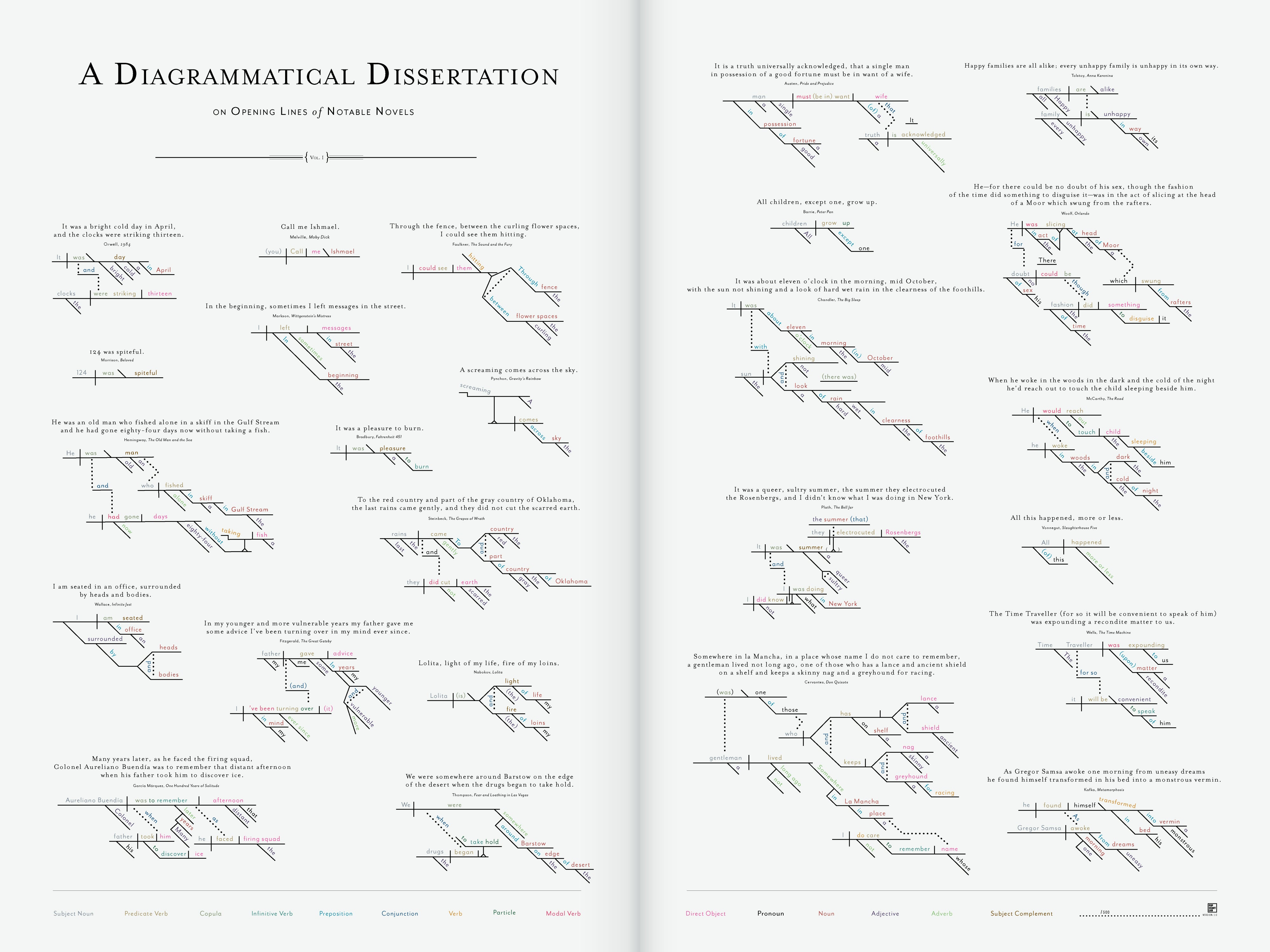
https://cdn.shopify.com/s/files/1/0211/4926/files/P-Sentences-Zoom.jpg?11916733149575478088
Vocabulary:
Every complete sentence contains two parts: a subject and a predicate. The subject is what (or whom) the sentence is about, while the predicate tells something about the subject.
2. Grammar--take test from previous post and post results on this blog entry
3. Study Guide/ Things Not Seen
Think, Pair, Share: Discuss questions Ch. 1-5. Post a response on blog.
4. Finish and post your Author's Bio
HMWK: Read Ch. 6-10 Things Not Seen
Friday, September 7, 2018

Wednesday, September 5, 2018
Tuesday, August 28, 2018
Welcome Back SOTA Creative Writing Majors!
AGENDA:
Welcome video:
https://www.youtube.com/watch?v=FH3akqBwYfo
1. Explanation of seating arrangement, how to sign in to the computer for the year and save this blog as a favorite.
How to log in: (MM/DD/YYYY)
Go to blog: http://grammarandstyle09.blogspot.com
Save as favorite.
2. Review Course Criteria/Writing Lab procedures and assign lockers! Return signed course criteria sheet for credit FRIDAY!
3. Activity: Pass out journals. Pass out Things Not Seen.
4. Morning Reflection #1. POST RESPONSE FOR CREDIT TODAY!
https://ed.ted.com/lessons/does-grammar-matter-andreea-s-calude#digdeeper
5. Introductions--About the Author--Using Word on the Mac--
How to log in: (MM/DD/YYYY)
Go to blog: http://grammarandstyle09.blogspot.com
Save as favorite
Write a short biographical paragraph about yourself in the 3rd person (he or she) for the publication of your new book. Describe yourself to let your reading public know more about who you are, what you have accomplished, what interests you, and what your life is like.
Example:
Alexander Christie is currently a 9th grade creative writing major at School of the Arts. He is 13 years old. He currently lives with his parents in Rochester, New York and has a sister studying theatre in New York City. In his free time, he enjoys reading books and writing short stories. His family is very supportive of his writing and everything else he is invested in. Although he hasn’t written any long term pieces of writing, he hopes to write and publish a novel someday. Aside from writing, he also enjoys singing, dancing, and acting in various productions. He loves living in an arts community and being able to do the things he loves. Going into his 9th grade year, he is excited to be learning new things about writing and himself. He hopes that he can continue to express himself through the arts after school, and share his knowledge with the world.
Share these bios. Post on blog.
6.. Visit Grammar and Style Websites--Using the internet
Stephen Fry on Language:
http://www.youtube.com/watch?v=J7E-aoXLZGY&feature=youtube_gdata
Grammar Girl
www.grammar.quickanddirtytips.com
Grammar Bytes
http://www.chompchomp.com/menu.htm
The Blue Book
www.grammarbook.com
7. Take the GRAMMAR pretest and post your results:
http://www.grammarbook.com/grammar_quiz/grammar_pretest.asp
HMWK: Get course criteria sheet signed for 10 points
Read Things Not Seen Ch. 1-5 for Friday
Tuesday, May 29, 2018
FINAL PORTFOLIO/FINAL EXAM
- A 4-6 page, double-spaced, typed self-evaluation essay
- A variety of your best work chosen from all your CW classes
Your final portfolio will count for both 9th-grade creative writing classes and will be reviewed by Mr. Craddock & Ms. Gamzon. It will constitute 20% of your final grade.
Part A. Self-Evaluation Essay
Part B. Portfolio
Select work that you created this year in Ms. Gamzon or Mr. Craddock’s classes. All work should be copies of original work. No journals will be accepted. Follow the guideline below.
Table of contents. Your table of contents should order your portfolio into the following parts:
a. Poetry
b. Fiction
c. Non-fiction
d. Scripts
e. Special projects
Poetry. Choose 6-8 of your best poems. Select work that shows your understanding and growth in the field of poetry. Each poem’s title should be listed in the table of contents.
Fiction. Choose 4-6 of your best fiction pieces. Select work that shows your understanding and growth in the field of fiction. Each fiction piece’s title should be listed in the table of contents.
Non-fiction. Choose 3-4 of your best non-fiction pieces (including text of speeches, etc.) Select work that shows your understanding and growth in the field of non-fiction. Each non-fiction piece’s title should be listed in the table of contents.
Scripts: Choose 1-2 of your best scripts. Select work that shows your understanding and growth in the field of script writing. Each script’s title should be listed in the table of contents.
Special Projects: Choose 3-4 of your special projects (newsletter, slideshow or Prezi, brochure, literary magazine, house on mango street booklet, collaborative story project, human interest video, blog, animated poetry, etc.) which show your growth and creative ability. Each project should be listed in the table of contents. If you have been working on a project not assigned in class, you may include this work in your special projects. (Example: I am working on a novel, and I haven’t told my teachers or I have written a musical, etc.) Please do NOT print your special project, unless you already have an extra copy. Instead, please talk about these projects in your reflection.
Self Reflection Non-Fiction - Creative Essay:
During the entire freshman year, we have thrown quite a bit of information, projects, and assignments your way. We did not do this to be cruel, but to see how you react to pressure, deadlines, writing & reading skills, and so that you had the opportunity to grow as a writer and a student. It is true that the most important qualification for writers is that they write. Apart from this, reading is also the most important way to improve your writing at this stage. These introductory courses are designed to get you to know yourself as a student and writer a little better. Part of this is the need to self-reflect. Examine the writing rubrics and the material in your portfolio. Reflect on your work this year.
Reflective piece: 4-6 pages, double-spaced. Write about how you’ve grown as a writer this year, what has been easy/hard for you, what areas you feel you need more work in; reflect on your progress as a writer, a reader, and as a student. Write about each selected piece you have chosen to include in your portfolio (per genre): why did you include these pieces in your portfolio? How does the piece show your growth and development as a writer in this particular genre? What did you learn about yourself concerning writing from this assignment or project? Discuss the writing process you used to create the work, where you got your ideas, what you learned about the form or genre of the work as you wrote and revised it, what you learned about yourself as a writer, etc. Discuss special projects and reading that had an impact on you. What did you learn about writing and about yourself through these assignments this year?
Rubric
_____ Table of Contents 10 points
_____ Reflective Essay (4-6 pages) 30 points
_____ Poetry (6-8 poems) 10 points
_____ Fiction (4-6 short stories) 10 points
_____ Non Fiction (3-4 creative essays/speeches) 10 points
_____ Special Projects (3-4 special projects) 10 points
_____ Grammar (Work is clean, copy-edited, free of errors) 10 points
Penalty: (-1/2 point for each grammar error. Up to -10 points)
_____ Portfolio turned in complete and on time 10 points
Penalties:
• Late portfolios (-10 points per day late)
• Handwritten work (-1 for each handwritten page)
• Grammar errors (see above)
Friday, May 25, 2018
Poetry Project
AGENDA:
Continue to work on your POETRY PROJECTS. DUE: Friday, June 1.
You will be preparing your FINAL PORTFOLIO the following week.Instructions coming soon.
Continue to work on your POETRY PROJECTS. DUE: Friday, June 1.
You will be preparing your FINAL PORTFOLIO the following week.Instructions coming soon.
Wednesday, May 23, 2018
New prompt: Steal a Line: First Line
AGENDA:
First Line Exercise
Take one line from a poem of your own that is unfinished or a poem by another poet. It does not matter where the line occurs in the poem, but you want to select the best line from the poem. Use this line as the first line of a new poem. Try to maintain the same quality of sound, language and thought that the first line presents.
(by Stephen Dunn, from The Practice of Poetry, Robin Behn and Chase Twichell, eds.)
Continue to work on poetry project. If you have not done a "Shoveling Snow with Buddha poem" work on that and turn it in.
Revise and edit your poems. Share poems with peers.
First Line Exercise
Take one line from a poem of your own that is unfinished or a poem by another poet. It does not matter where the line occurs in the poem, but you want to select the best line from the poem. Use this line as the first line of a new poem. Try to maintain the same quality of sound, language and thought that the first line presents.
(by Stephen Dunn, from The Practice of Poetry, Robin Behn and Chase Twichell, eds.)
Continue to work on poetry project. If you have not done a "Shoveling Snow with Buddha poem" work on that and turn it in.
Revise and edit your poems. Share poems with peers.
- MAKE SURE YOUR POEMS SHOW AN UNDERSTANDING OF STRUCTURE! BE CONSCIOUS OF LINE-BREAKING AND ENJAMBMENT.
- POEMS SHOULD SHOW A VARIETY OF STYLES AND GENERALLY SHOULD BE 12-20 LINES LONG.
- POEMS SHOULD HAVE LINES SINGLE-SPACED.
- DOUBLE SPACE TO INDICATE STANZAS.
- POEMS SHOULD HAVE MORE THAN ONE STANZA UNLESS THE PROMPT SPECIFICALLY ASKS FOR LESS.
- POEMS SHOULD USE POETIC LANGUAGE: IMAGERY, METAPHOR, SIMILE, SENSORY DETAILS, ETC.
Monday, May 14, 2018
New Model Poem--Rita Dove
AGENDA:
Here's a new model for poetry writing--the dramatic monologue (interior monologue)
Whose voice is this? George Zimmerman
"Trayvon Redux"
Think of a person in the news or just a character you can imagine in a dramatic situation. What are they thinking? What were they thinking? Whose voice is this?
OR
Use a powerful quote as an epigraph to respond to in a poem.
In literature, an epigraph is a phrase, quotation, or poem that is set at the beginning of a document or component. The epigraph may serve as a preface, as a summary, as a counter-example, or to link the work to a wider literary canon, either to invite comparison or to enlist a conventional context.
It is difficult/to get the news from poems /yet men die miserably every
day/for lack/of what is found there./Hear me out/for I too am concerned/
and every man/who wants to die at peace in his bed/besides.
William Carlos Williams, “Asphodel, that Greeny Flower”
Move along, you don't belong here.
This is what you're thinking. Thinking
drives you nuts these days, all that
talk about rights and law abidance when
you can't even walk your own neighborhood
in peace and quiet, get your black ass gone.
You're thinking again. Then what?
Matlock's on TV and here you are,
vigilant, weary, exposed to the elements
on a wet winter's evening in Florida
when all's not right but no one sees it.
Where are they – the law, the enforcers
blind as a bunch of lazy bats can be,
holsters dangling from coat hooks above their desks
as they jaw the news between donuts?
Hey! It tastes good, shoving your voice
down a throat thinking only of sweetness.
Go on, choke on that. Did you say something?
Are you thinking again? Stop! – and
get your ass gone, your blackness,
that casual little red riding hood
I'm just on my way home attitude
as if this street was his to walk on.
Do you do hear me talking to you? Boy.
How dare he smile, jiggling his goodies
in that tiny shiny bag, his black paw crinkling it,
how dare he tinkle their laughter at you.
Here's a fine basket of riddles:
If a mouth shoots off and no one's around
to hear it, who can say which came first –
push or shove, bang or whimper?
Which is news fit to write home about?

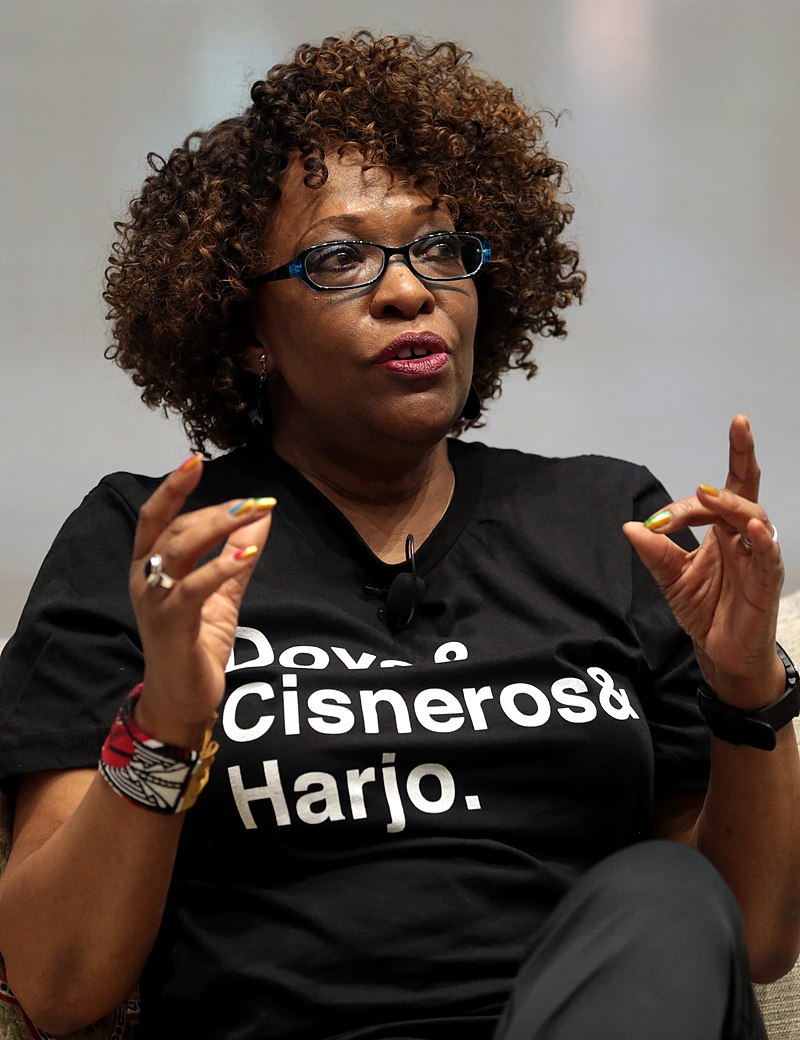
Rita Frances Dove (born August 28, 1952) is an American poet and essayist. From 1993 to 1995, she served as Poet Laureate Consultant in Poetry to the Library of Congress. She is the first African-American to have been appointed since the position was created by an act of Congress in 1986 from the previous "consultant in poetry" position (1937–86). Dove also received an appointment as "special consultant in poetry" for the Library of Congress's bicentennial year from 1999 to 2000.[1] Dove is the second African American to receive the Pulitzer Prize for Poetry, in 1987, and she served as the Poet Laureate of Virginia[2] from 2004 to 2006.
Here's a new model for poetry writing--the dramatic monologue (interior monologue)
Dramatic Monologue
Dramatic monologue in poetry, also known as a persona poem, shares many characteristics with a theatrical monologue or soliloquy: an audience is implied; there is no dialogue; and the poet speaks through an assumed voice—a character, a fictional identity, or a persona. Because a dramatic monologue is by definition one person’s speech, it is offered without overt analysis or commentary, placing emphasis on subjective qualities that are left to the audience to interpret.
"Trayvon Redux"
Think of a person in the news or just a character you can imagine in a dramatic situation. What are they thinking? What were they thinking? Whose voice is this?
OR
Use a powerful quote as an epigraph to respond to in a poem.
In literature, an epigraph is a phrase, quotation, or poem that is set at the beginning of a document or component. The epigraph may serve as a preface, as a summary, as a counter-example, or to link the work to a wider literary canon, either to invite comparison or to enlist a conventional context.
Trayvon, Redux
By Rita DoveIt is difficult/to get the news from poems /yet men die miserably every
day/for lack/of what is found there./Hear me out/for I too am concerned/
and every man/who wants to die at peace in his bed/besides.
William Carlos Williams, “Asphodel, that Greeny Flower”
Move along, you don't belong here.
This is what you're thinking. Thinking
drives you nuts these days, all that
talk about rights and law abidance when
you can't even walk your own neighborhood
in peace and quiet, get your black ass gone.
You're thinking again. Then what?
Matlock's on TV and here you are,
vigilant, weary, exposed to the elements
on a wet winter's evening in Florida
when all's not right but no one sees it.
Where are they – the law, the enforcers
blind as a bunch of lazy bats can be,
holsters dangling from coat hooks above their desks
as they jaw the news between donuts?
Hey! It tastes good, shoving your voice
down a throat thinking only of sweetness.
Go on, choke on that. Did you say something?
Are you thinking again? Stop! – and
get your ass gone, your blackness,
that casual little red riding hood
I'm just on my way home attitude
as if this street was his to walk on.
Do you do hear me talking to you? Boy.
How dare he smile, jiggling his goodies
in that tiny shiny bag, his black paw crinkling it,
how dare he tinkle their laughter at you.
Here's a fine basket of riddles:
If a mouth shoots off and no one's around
to hear it, who can say which came first –
push or shove, bang or whimper?
Which is news fit to write home about?
Rita Frances Dove (born August 28, 1952) is an American poet and essayist. From 1993 to 1995, she served as Poet Laureate Consultant in Poetry to the Library of Congress. She is the first African-American to have been appointed since the position was created by an act of Congress in 1986 from the previous "consultant in poetry" position (1937–86). Dove also received an appointment as "special consultant in poetry" for the Library of Congress's bicentennial year from 1999 to 2000.[1] Dove is the second African American to receive the Pulitzer Prize for Poetry, in 1987, and she served as the Poet Laureate of Virginia[2] from 2004 to 2006.
Subscribe to:
Posts (Atom)
Montana 1948 Readings/Natalie Goldberg Test 1 "I remember"
Montana 1948 Readings/Natalie Goldberg Test 1 "I remember" Marcy Gamzon • Sep 21 (Edited Sep 21) 100 points Due Tomorrow AGENDA:...

-
For homework and classwork, write 5 sentences using the first 5 vocabulary words. Answer the first 6 study guide questions relating to Ch. ...
-
Choose ONE of the following topics and discuss it in a well-developed essay. You may use your book to provide text-based details. Post yo...
-
Welcome Back, Creative Writing Majors! AGENDA: Welcome to SOTA's Creative Writing Lab and the Creative Writing program. Ms. Ga...